
There's a trend in our industry that concerns us.
Increasingly, technology companies are offering “self-service” surveying and mapping tools. Upload your title documents, draw a line on a map, download a plan. Quick, cheap, convenient. No need to involve those expensive professionals.
We understand the appeal. Property transactions are stressful and costly. Anything that promises to simplify the process and reduce fees sounds attractive. And for some tasks, technology genuinely does make things faster and better.
But there's a reason that land surveying has been a professional discipline for centuries. Some work requires expertise, judgment, and accountability that automated systems simply cannot provide.
What's Actually at Stake
A boundary plan isn't just a drawing. It's a legal document that defines property rights — potentially for generations.
Get it right, and nobody thinks about it again. The boundary is clear, the registration proceeds smoothly, and owners on both sides know exactly what's theirs.
Get it wrong, and the consequences can be severe:
- Registration rejected — Delays, additional costs, transactions falling through
- Future disputes — Ambiguous boundaries cause neighbour conflicts that cost thousands to resolve
- Development problems — Buildings positioned based on incorrect boundaries may encroach on neighbouring land
- Title defects — Errors in registration can affect property value and saleability for years
The plan you submit today may not be looked at again for decades — until someone builds an extension, sells part of the land, or disagrees with a neighbour about a fence line. At that point, whatever was recorded becomes critically important.
What Automated Tools Can't Do
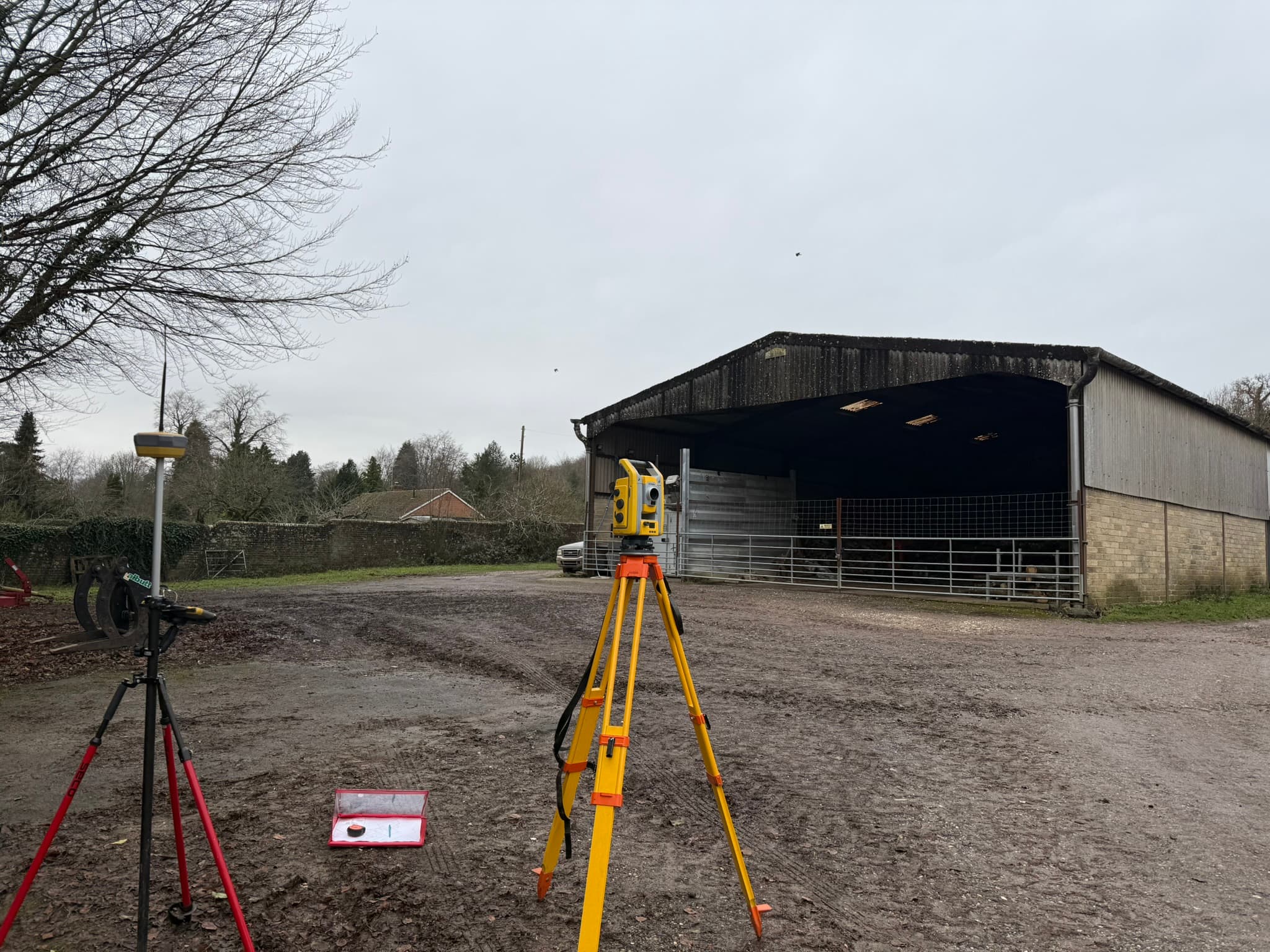
Technology is powerful. We use sophisticated equipment ourselves — GPS systems accurate to centimetres, total stations that measure angles to fractions of a degree, software that processes thousands of data points. Technology makes us more accurate and efficient.
But technology is a tool, not a replacement for expertise. Here's what automated “self-service” platforms cannot do:
Interpret ambiguity
Real-world boundaries are messy. Title documents from the 1920s describe boundaries “along the hedge” — but the hedge has been replaced twice since then, and it's not quite where the original was. OS mapping shows a fence line, but the fence was moved fifteen years ago. The transfer plan shows a straight boundary, but the physical feature curves.
Resolving these ambiguities requires judgment. Which evidence is most reliable? What did the original conveyance intend? How should conflicting information be reconciled? These are questions that require professional expertise — understanding of property law, surveying conventions, historical mapping practices, and practical experience of how boundaries evolve over time.
An algorithm can't make these judgments. It can only process the inputs it's given.
Verify reality
A self-service platform works from existing data — typically OS mapping and uploaded documents. It cannot verify whether that data reflects what actually exists on the ground.
OS mapping is excellent, but it's not infallible. Features change. New fences are built; old ones removed. Hedges grow, are cut back, or are grubbed out entirely. Buildings are extended. Streams change course.
A plan based purely on desk-top data assumes that data is correct. Sometimes it isn't. A professional surveyor checks — and flags problems before they're built into a legal document.
Exercise professional judgment
Some situations require someone to say: “This doesn't look right. We should investigate further before proceeding.”
Perhaps the title description doesn't match the physical features. Perhaps there's evidence of adverse possession. Perhaps the boundary shown would create a ransom strip that neither party intended. Perhaps the access route on paper doesn't work in practice.
These issues require professional judgment — the ability to recognise that something needs attention, even when nobody has specifically asked about it. Automated systems process inputs and produce outputs. They don't exercise judgment.
Accept accountability
When a chartered surveyor produces a plan, they're professionally accountable for it. They carry professional indemnity insurance. They're subject to regulatory oversight. They can be held to account if their work is negligent.
Who's accountable when a self-service platform produces a defective plan? The terms of service will almost certainly disclaim liability. The platform operator isn't a regulated professional. If something goes wrong, there's nobody standing behind the work.
The False Economy
Self-service platforms compete on price. A plan that might cost a few hundred pounds from a surveyor can be produced for a fraction of that — sometimes almost nothing — through an online tool.
This looks like savings. Often it isn't.
The cost of a professional plan is trivial in the context of a property transaction. Legal fees, stamp duty, estate agent commissions, mortgage costs — a survey fee is a rounding error. And unlike most transaction costs, it directly affects whether the registration succeeds and whether the boundaries are properly defined.
The cost of getting it wrong is not trivial:
- Rejected applications mean additional professional fees to fix the problem, plus delays that can jeopardise transactions
- Boundary disputes typically cost thousands in surveying and legal fees — sometimes tens of thousands if they reach court
- Title defects can affect property value and complicate future sales for years
The maths
We regularly see the consequences of inadequate plans — work that comes to us after problems have emerged. By that point, the cost of resolution far exceeds what proper plans would have cost originally.
When Technology Helps — and When It Doesn't
We're not Luddites. Technology has transformed surveying for the better, and we use it extensively.
GPS and total station equipment allows measurement accuracy that was impossible a generation ago. Digital mapping provides instant access to data that once required weeks to obtain. CAD software produces clearer, more accurate plans than hand drafting ever could. We can deliver work faster, more accurately, and often more affordably than was possible twenty years ago.
Technology as a tool in expert hands: excellent.
Technology as a replacement for expert judgment: problematic.
The distinction matters. A skilled cartographer using modern software produces better work than a skilled cartographer using pen and paper. But an algorithm with no human oversight doesn't produce professional work at all — it produces automated output that may or may not be fit for purpose.
The Value of Experience
Our managing director has been working on boundary and mapping issues for over thirty years. In that time, he's seen thousands of situations — straightforward and complex, routine and unusual, amicable and bitterly disputed.
That experience has value. It means recognising patterns, anticipating problems, knowing what questions to ask. It means having seen situations like yours before and understanding what's likely to matter.
Experience can't be automated. It's accumulated through years of professional practice — getting things right, learning from mistakes, building judgment through exposure to real situations.
When you instruct a professional surveyor, you're not just paying for someone to operate equipment and produce a drawing. You're paying for judgment informed by experience. That's what distinguishes professional services from automated processing.
Regulation Exists for a Reason
Chartered surveyors operate within a regulatory framework. RICS (the Royal Institution of Chartered Surveyors) sets standards, requires continuing professional development, investigates complaints, and can discipline members who fall short.
This regulation exists because surveying work matters. Property rights are fundamental. Errors can cause serious harm. The public needs assurance that professionals are competent and accountable.
Self-service platforms operate outside this framework. They're technology companies, not regulated professionals. They're not subject to professional standards or regulatory oversight. If their output is defective, there's no professional body to complain to.
For work that affects legal rights — and boundary plans certainly do — professional regulation provides important protection.
Our View
We believe that work affecting property boundaries and legal titles should be done by qualified professionals who understand what they're doing and are accountable for the results.
This isn't self-interest. We'd be perfectly happy if every boundary plan in England were produced by a qualified surveyor — regardless of whether it was produced by us. What concerns us is work being done without proper expertise, leading to problems that could have been avoided.
The trend toward automation and self-service is understandable. Efficiency is valuable. Cost reduction is attractive. But some work doesn't suit that approach. Land surveying is inherently about physical reality, legal interpretation, and professional judgment. These aren't things that can be fully automated — at least not with current technology.
Perhaps artificial intelligence will eventually develop genuine expertise in boundary interpretation. Perhaps future systems will be able to exercise professional judgment and accept accountability for their outputs. We're sceptical, but we acknowledge it's possible.
For now, though, the choice is between professional work and automated processing. They're not the same thing, and they don't produce the same results.
What We Offer
When you instruct us, you get:
- Qualified professionals — RICS-chartered surveyors with decades of experience
- Proper investigation — We check that plans reflect reality, not just data
- Professional judgment — We identify issues and advise on them, even when nobody asked
- Accountability — We stand behind our work, with professional indemnity insurance and regulatory oversight
- Clear communication — We explain what we've found and what it means, in plain language
We're not the cheapest option. We don't try to be. Our aim is to do work properly, so that our clients don't face problems later.
For clients who value that approach, we're here to help.
This isn't administrative trivia. It matters.
We think work that matters deserves proper attention from people who know what they're doing. That's been our approach for over twenty-five years, and we don't see any reason to change it.